Analytics Agents
Agentic workflows that bridge insight to action
Build agents that query disparate data sources, analyze the numbers, and take action: create tickets, trigger APIs, escalate incidents, and notify your team
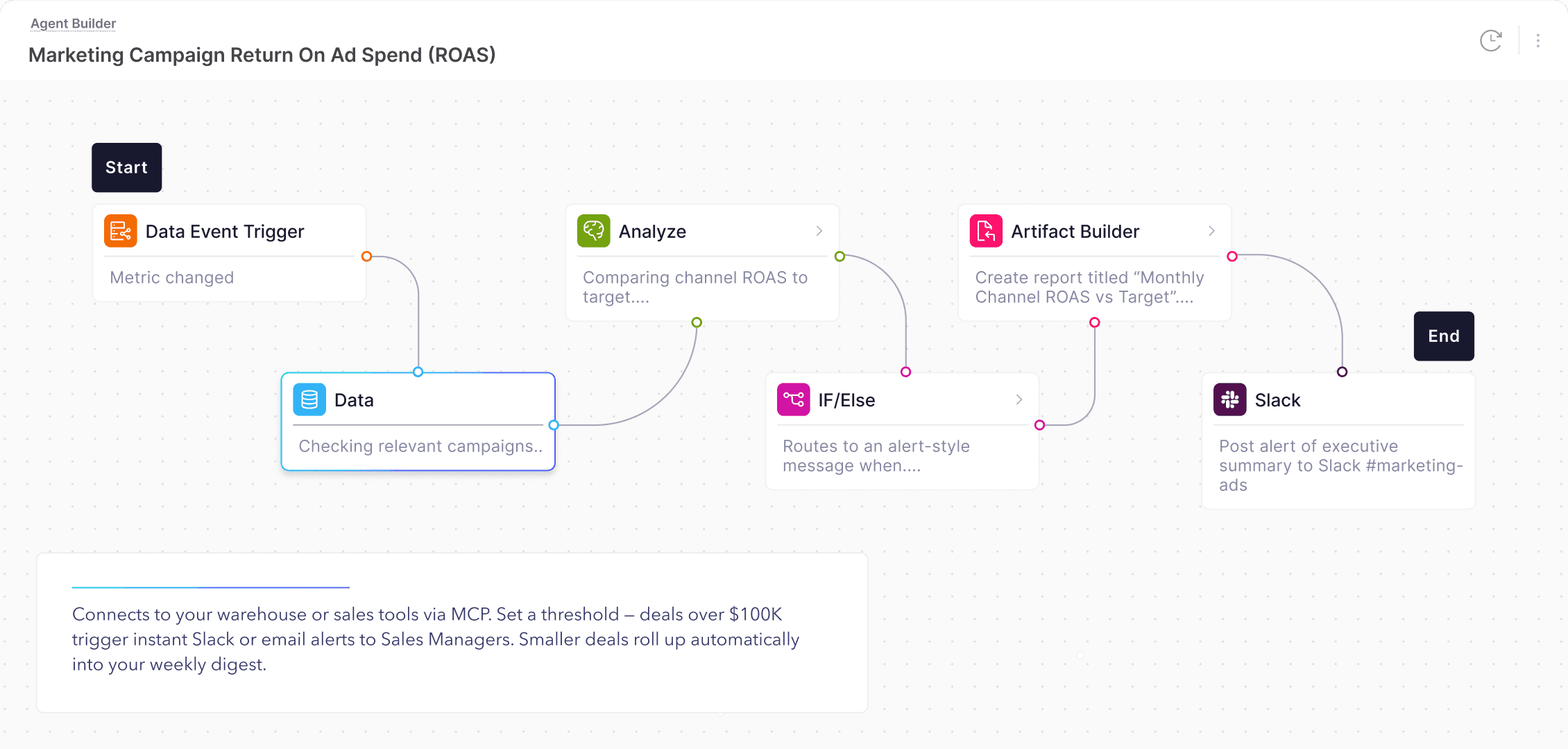
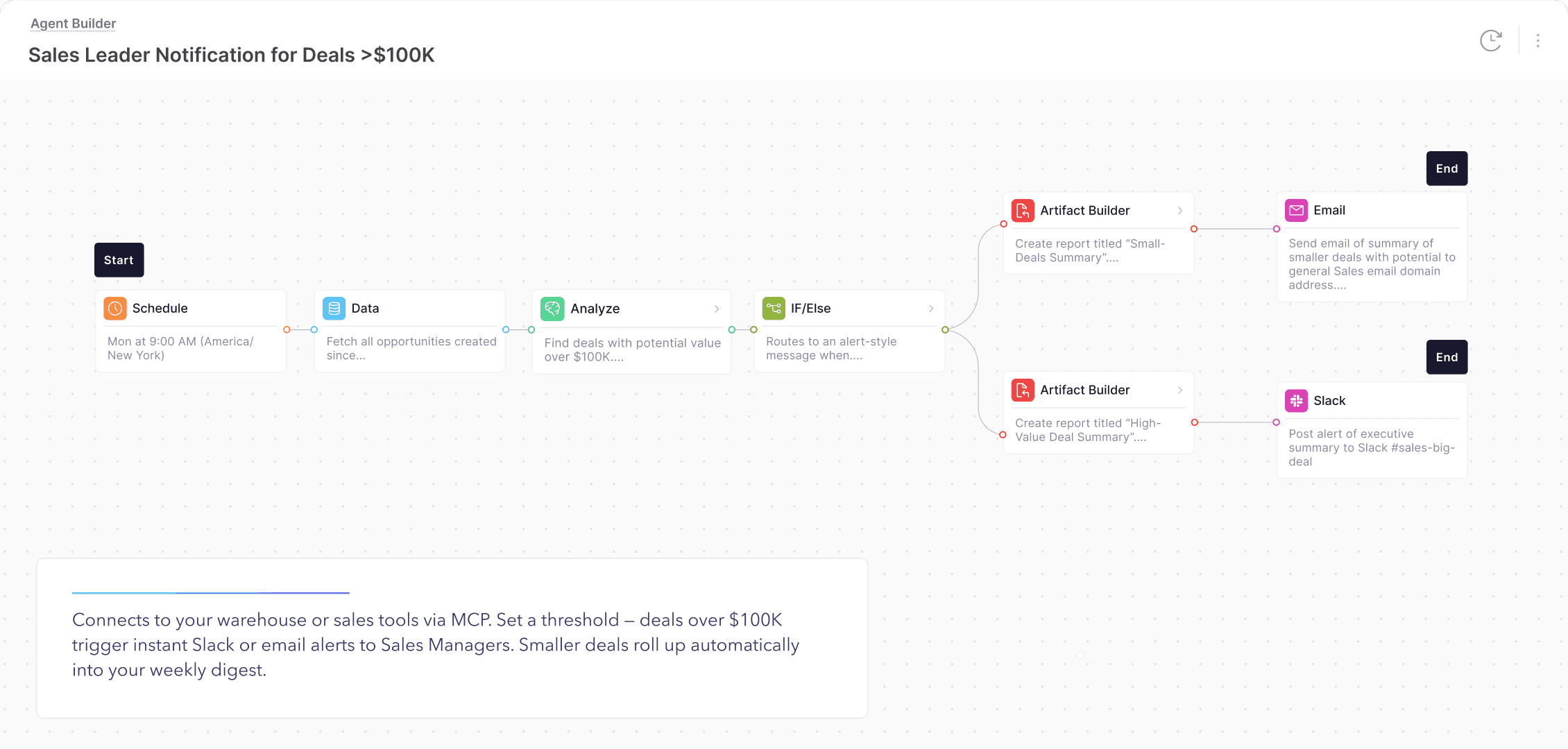
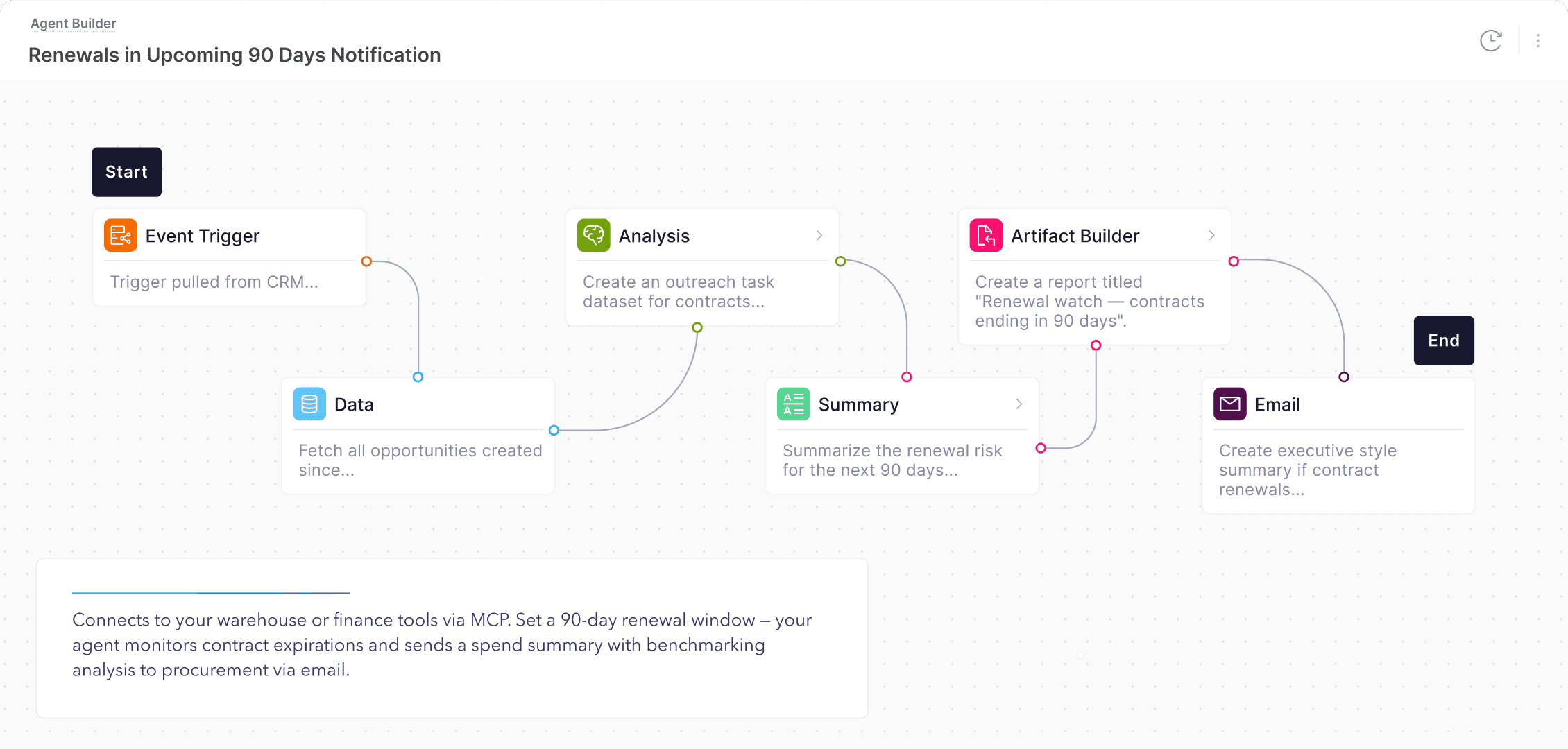
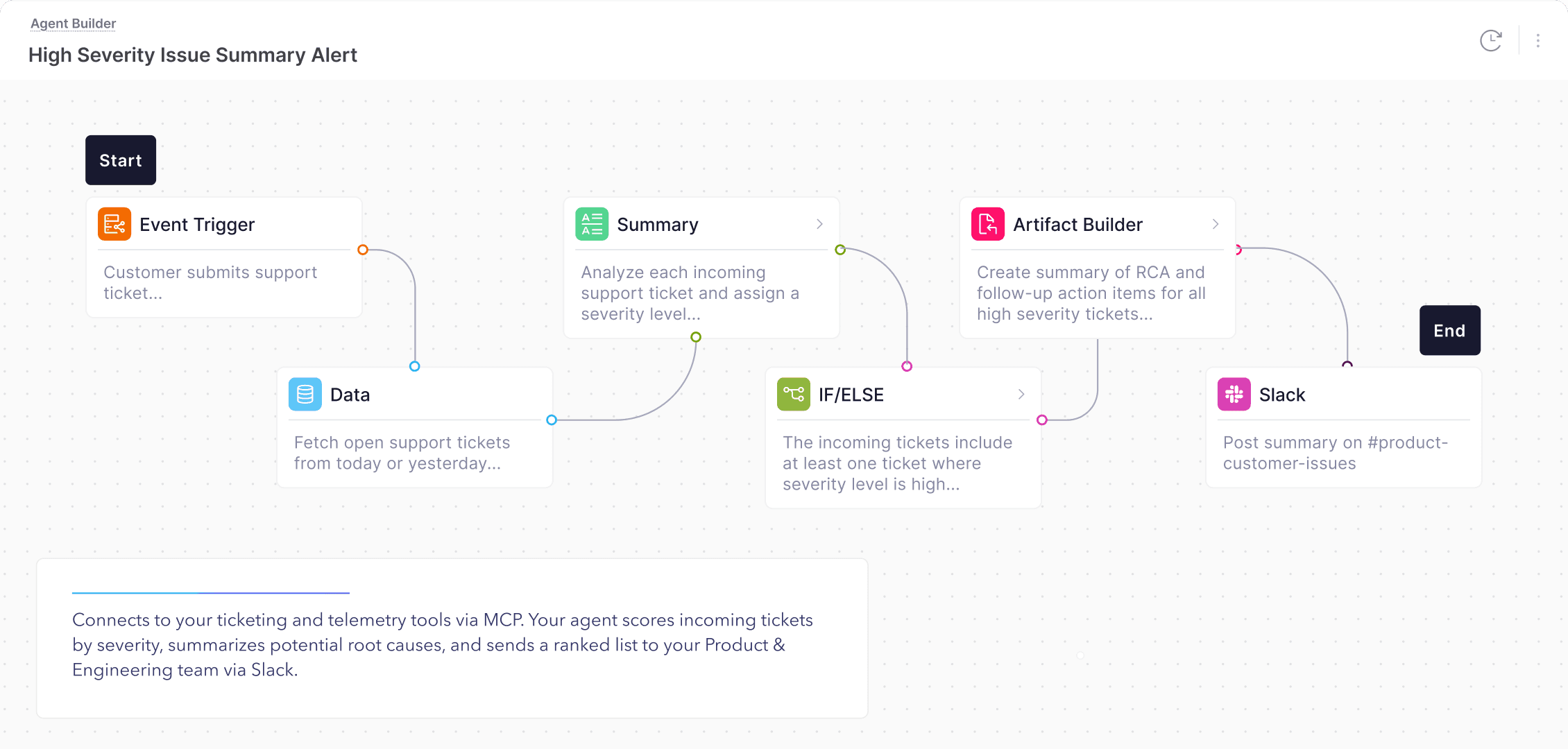
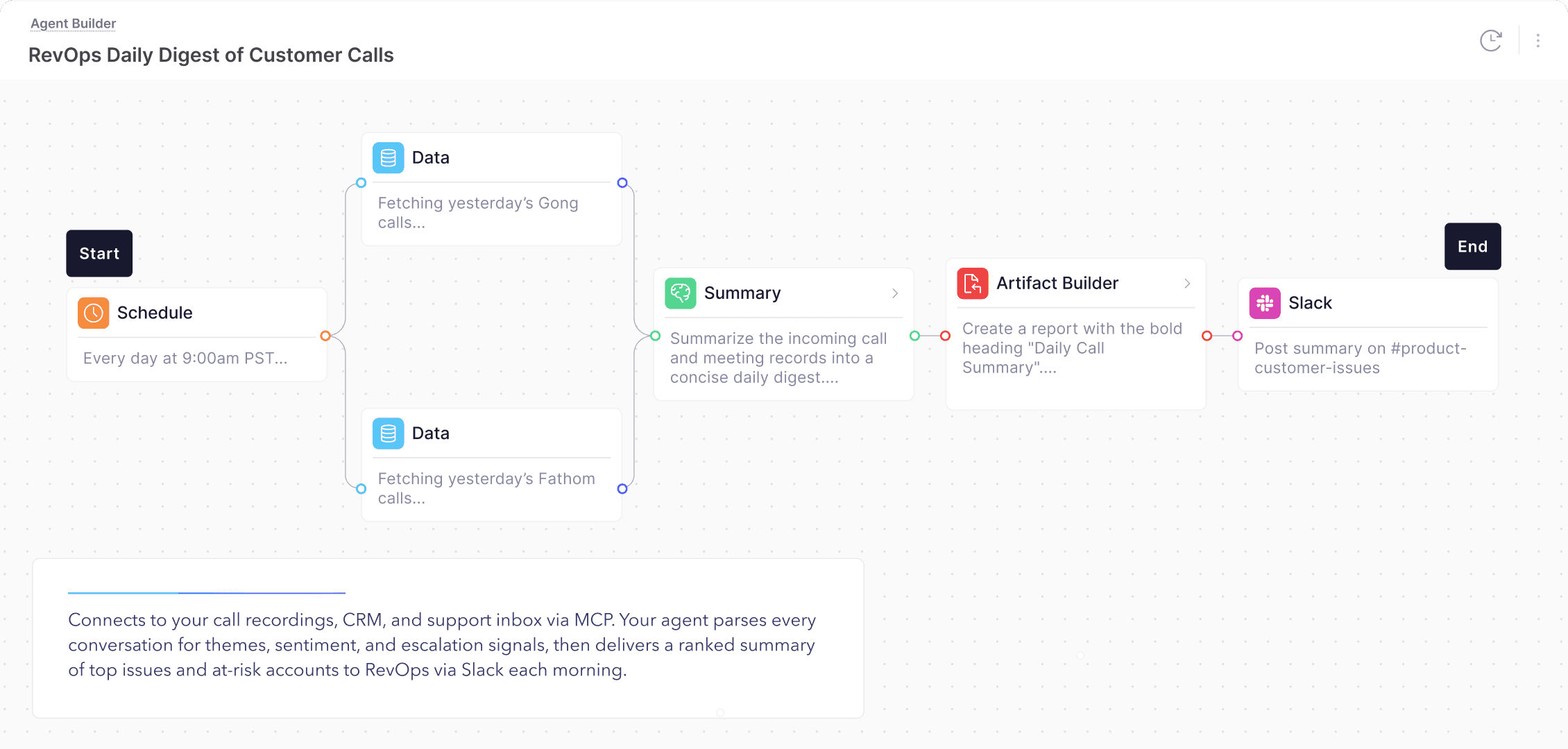
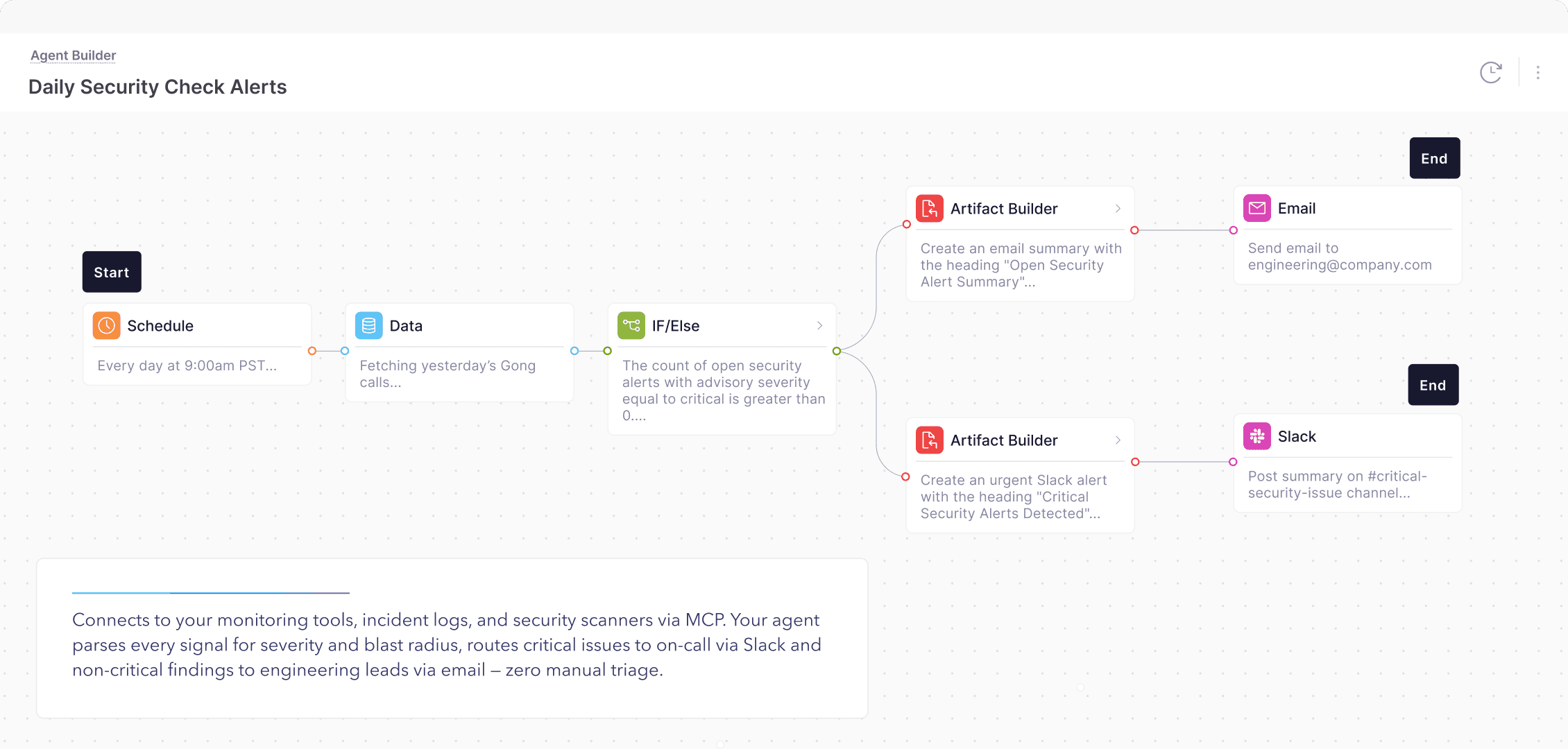
Marketing
Sales
Finance
HR & People
IT & Engineering
Operations

Activate your data stack and turn it into a flywheel for your business
Agents that close the loop between insight and action
Grounded in your data
Define what metrics mean, set calculation rules, and refine context over time. The more data sources your data team connects and the more context they give WisdomAI, the more accurate it gets.
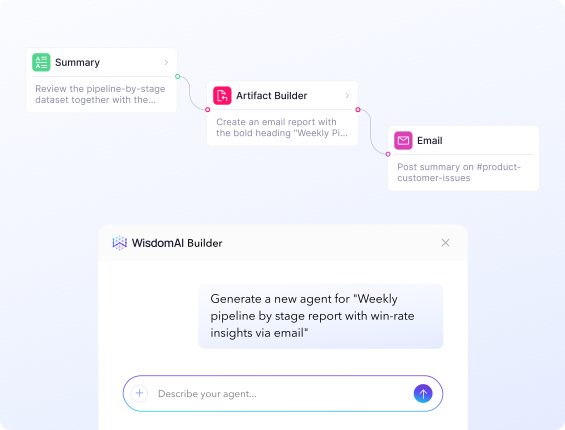
Text to agentic workflow
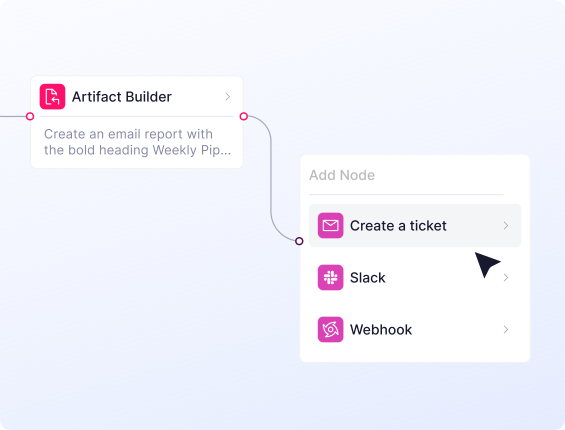
Describe what you want in plain English. WisdomAI builds the full agent in seconds: data connections, reasoning logic, and actions. Drag and drop one node at a time. No code required.
Insight-to-action, automatically
WisdomAI Agentic workflows do more than notify when thresholds are reached. They reason over data, do the work, make decisions with governed context, and take the right actions with observability built-in.
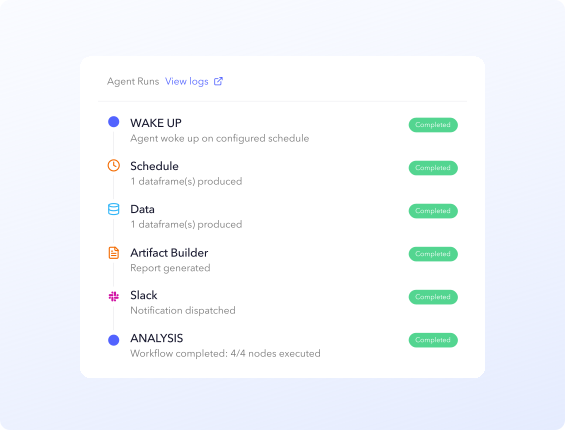
Full observability
WisdomAI agentic workflows provide observability and auditability at every step. The run visualizer shows you what SQL ran, what the AI reasoned, what actions were taken, and why.
Adaptive Context Engine
The Adaptive Context Engine learns your business semantics: metrics, nuanced data definitions, and what data means in the moment as business conditions evolve.
Controlled lifecycle
Draft, Test, Publish, Activate, Run. Human-in-the-Loop nodes gate critical actions behind approvals.
Complex workflows
Model and deploy complicated workflows with conditions, loops, Human-in-the-Loop, and more. Analytics Agents don't lose context between steps in long workflows.
Reviewed runs
Scale and repeatability is engineered-in. Watch and modify agent runs and deploy with determinism and predictability in production workflows.
Two ways to build
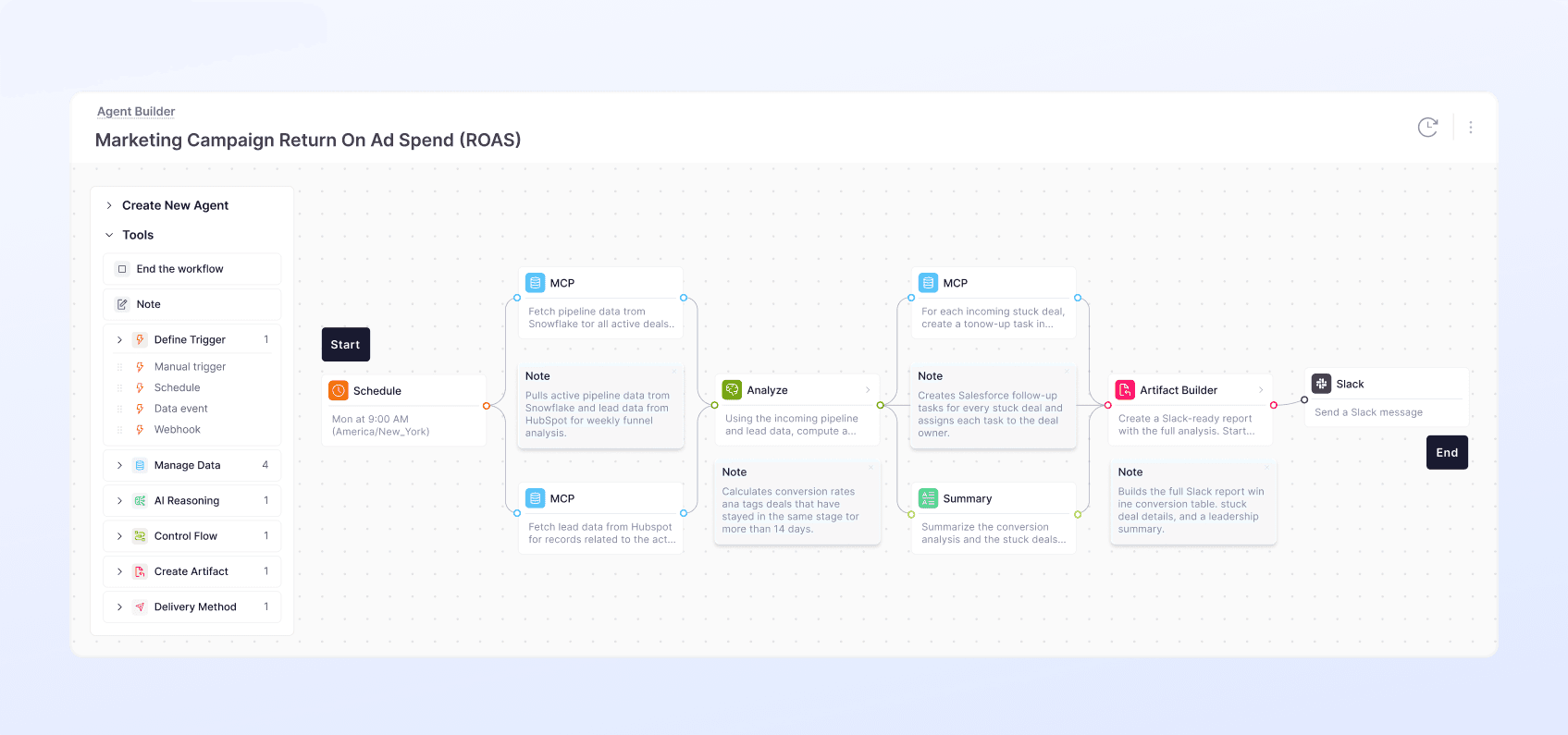
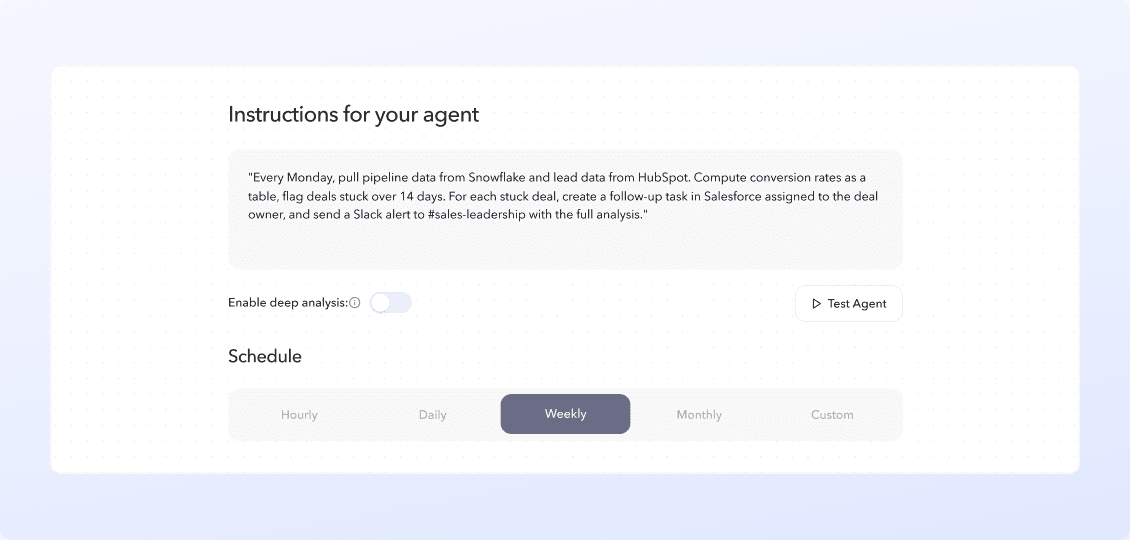
Start with words, refine on the canvas.
Both modes produce agents that analyze and act.
Visual Mode
Prompt Mode
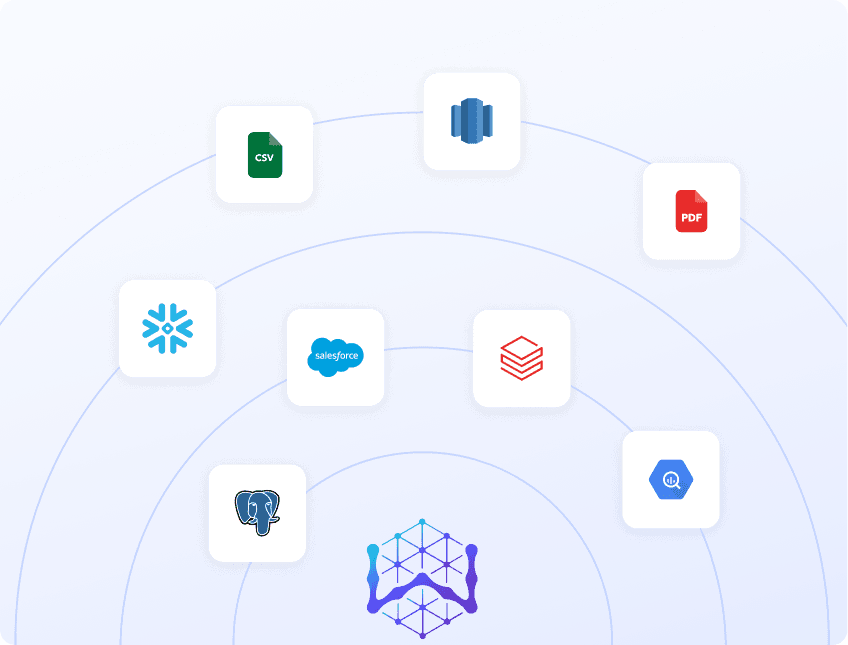
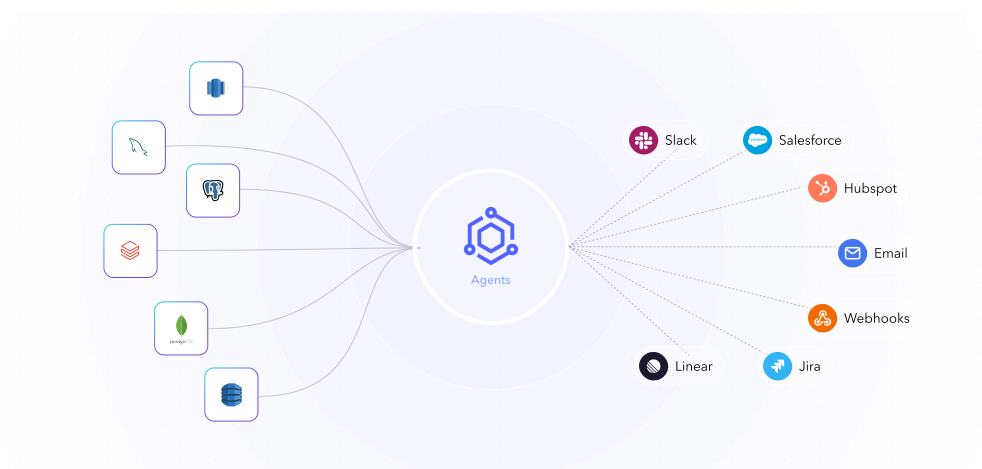
Connected to your stack
Analytics Agents reason across disparate data sources, then write back to your systems in a trusted manner
Trusted at enterprise scale
WisdomAI Analytics Agents unlock the value of your data, freeing everyone for more strategic work
$53M
projected savings
2,000+
engineers enabled
"WisdomAI Agents enable teams to explore data interactively and uncover business drivers. Itˇs helped us deliver tailored daily intelligence to our client-facing teams, enabling them to engage clients proactively with timely, relevant insights in fast-moving, dynamic markets."
Mike Caruana
Tech Lead, Data Engineering and Business Intelligence
Frequently asked questions
Unblock everyone on your team
Every company has more demand for analytics support than it can meet. Free your data team and let the business self-serve with Analytics Agents that reason and act on data.